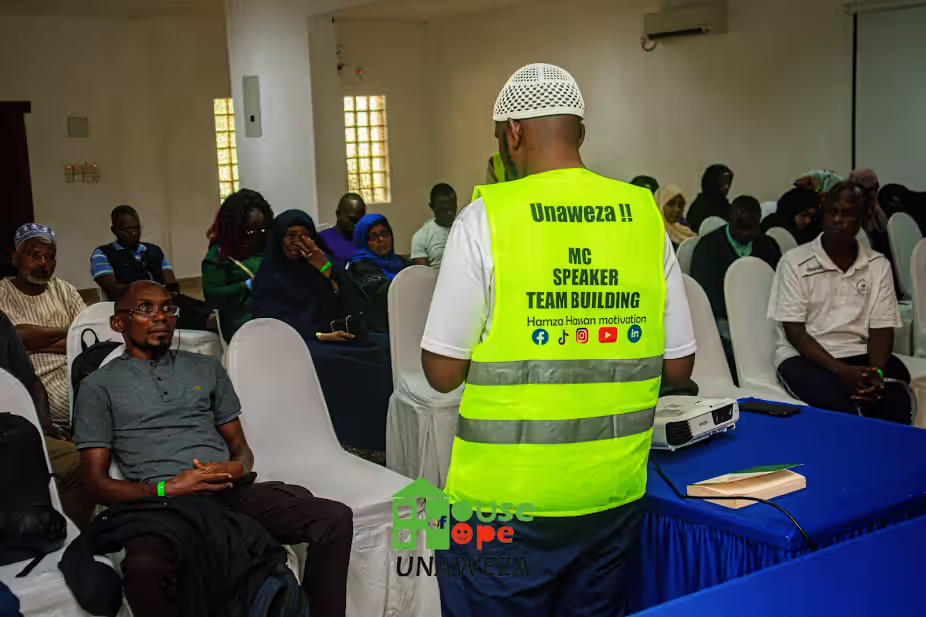

As a team dynamics and culture consultant, I am honestly tired of one single, repetitive narrative dominating the corporate space:
“The boss is always the problem.”
Everywhere you look, bookstore shelves and LinkedIn feeds are packed with manuals teaching employers how to inspire, how to empathize, and how to serve their employees better. And yes—leadership matters immensely. But where is the manual for employees? Where is the honest conversation about the worker who must understand that building a company in Kenya is not a hobby?
Businesses in this country are not built on endless corporate reserves. They are built on bank loans, immense pressure, delayed client payments, sleepless nights, and intense personal sacrifice. Many employers are holding their companies together purely with faith and overdrafts.
Yet, we rarely talk about "Workership."
What is the Workership Crisis?
The Workership Crisis is the growing culture of entitlement, laxity, and a total lack of ownership among employees. Too many workers today view a job as an absolute right, look at their employer as endlessly wealthy, and treat the company as an emotionally distant entity that owes them everything while they owe it nothing.
But businesses are fragile ecosystems. One careless, toxic employee can single-handedly destroy team morale, tank productivity, poison the culture, shatter customer trust, and bleed revenue.
I saw this painful reality firsthand very recently.
The Young Man Who Got a Second Chance
A young man reached out to me, completely at rock bottom. He had no food, couldn't pay his rent, and was almost on the street. I felt for him deeply. Wanting to help, I tapped into my professional network and called a friend of mine who runs a business. I asked him for a favor, and based on my word, the young man got the job.
Three months later, he was fired.
He called me crying, claiming, “They fired me for no reason, Hamza.”
I decided to call the employer to find out what went wrong. The story was entirely different. The very same young man who had absolutely nothing three months prior had started inciting the rest of the staff because salaries were delayed by just a few days.
He didn't care that the entire industry was struggling. He didn't care that the business’s cash flow was tight, or that the owner himself was under massive pressure to keep the doors open. He only saw his immediate frustration, entirely blind to the bigger picture.
A month after being let go, he was back in a crisis again—hungry, sick, and desperate. That experience forced me to confront a very uncomfortable truth: Some people want employment, but they do not want responsibility.
Why Employee Ownership Dictates Business Survival
Employee ownership matters because organizations survive through collective responsibility, not isolated management dictates. According to data from Gallup, highly engaged teams show significantly higher productivity and profitability than disengaged teams.
Strong, resilient organizations are built when employees look beyond their basic salary, titles, and daily complaints, and start thinking like stakeholders about sustainability, team success, and customer experience. If the company collapses under the weight of bad attitudes, everyone suffers—not just leadership.
Why Leadership Training Alone is an Expensive Mistake
Organizations often invest heavily in premium leadership retreats, executive coaching, and management seminars, but completely ignore the employee mindset. This creates a dangerous operational imbalance.
You cannot build a healthy, thriving culture when leaders are trained to care, but employees refuse to be held accountable. Culture is a shared responsibility.
How HeartSpark Consultancy Approaches Workership
At HeartSpark Consultancy, we don't believe in the "train the management and leave the staff" model. We train the whole team to look at the business through the same lens. We use our signature PLATE Framework to bridge this exact gap:
- P – Proactive Initiative: You do not need a management title to care about the company’s survival or find solutions.
- L – Leadership at All Levels: If the boat sinks, everyone gets wet—not just the captain.
- A – Adaptability to Change: When markets become difficult, teams must become resilient and agile, not destructive and resistant.
- T – Teamwork over Sabotage: Inciting colleagues and damaging internal morale is the ultimate form of professional self-sabotage.
- E – Excellence in Experience: Employees must treat their specific role with the highest level of personal ownership and professionalism.
The Real Solution to a Toxic Workplace Culture
The ultimate solution to a toxic workplace is shared ownership. According to research by the Harvard Business Review, organizations defined by high trust and mutual accountability consistently outperform low-trust workplaces in both staff retention and client collaboration.
Leaders must communicate clearly, build transparent trust, and treat employees fairly. But equally, employees must seek to understand business realities, protect the organizational culture, and think long-term.
The Hard Truth
To the employee: Your employer’s ability to keep the business alive is the only shield protecting your salary. Treat that shield with respect.
And to the leader: You cannot build a world-class organization with people who refuse to think like stakeholders. Stop training people only to follow instructions. Start training them to own the outcomes.
Healthy businesses are not built by leadership alone. They are built by teams that think.
Frequently Asked Questions
What is workership?
Workership refers to the mindset, proactive responsibility, and personal ownership that employees bring to their roles within an organization, balancing the leadership style of management.
Why do businesses struggle with employee accountability?
Most organizations heavily over-index on leadership development while entirely neglecting employee mindset, foundational ownership culture, and practical accountability systems.
Can leadership alone fix a broken workplace culture?
No. Workplace culture is a dynamic two-way street. A sustainable culture depends equally on supportive leadership behavior and active employee responsibility.
Why is employee ownership important for sustainability?
When employees think like stakeholders, it drastically improves internal accountability, cross-departmental teamwork, day-to-day productivity, and long-term business survival.
Author Block
Hamza Hassan is the Founder of HeartSpark Consultancy. As a corporate trainer, keynote speaker, and team-building consultant, he helps organizations fix communication breakdowns, eliminate disengagement, and bridge customer experience gaps through experiential transformation.
Let’s build a culture that lasts: houseofhopeinspiration@gmail.com